Visteon
Visteon
Visteon
Client
Interrdum
Service
Animation
Industry
Creative
Year
October 2025
Fleet Access Monitoring is a web application developed for Visteon, designed to simplify and streamline the slot booking process for unloading cargo. The application features two main stakeholders: Admin and Supplier. Each stakeholder has specific functionalities tailored to their roles, ensuring efficient operations.
Case Study
Fleet Access Monitoring for Visteon
CLIENT OVERVIEW
Visteon is a global automotive electronics supplier and a leading provider of innovative technology solutions. With a focus on efficiency and advanced operational systems, Visteon sought to optimize its logistics operations to streamline slot booking and cargo unloading processes.
CHALLENGES
1. Inefficient Slot Management: Manual slot booking processes led to scheduling conflicts and inefficiencies.
2. Limited Dock Utilization: Lack of real-time tracking and analytics caused underutilization of docks.
3. Poor Visibility: Absence of centralized monitoring hindered effective oversight of slot statuses.
4. Reporting Gaps: Difficulty in generating detailed slot and utilization reports.
SWOT ANALYSIS
Strengths
- Established industry presence.
- Commitment to technological innovation.
Weaknesses
- Manual processes causing delays.
- Limited real-time visibility into slot statuses.
Opportunities
- Enhance efficiency through automated slot booking.
- Optimize dock utilization with real-time monitoring.
Threats
- Increasing logistical demands.
- Potential delays impacting customer satisfaction.
PROBLEM STATEMENT
Visteon required a robust web application to automate slot booking, improve dock utilization, and enable real-time monitoring for effective logistics management.
PROPOSED SOLUTION
1. Role-Based User Access
The application includes two user roles:
Admin: Full control over configurations, supplier data management, and slot monitoring.
Supplier: Ability to book slots for cargo unloading and manage bookings efficiently.
2. Automated Slot Booking System
Suppliers can:
- View available slots based on selected dates and docks.
- Specify unloading type (bins or pallets) and quantity.
- Book slots, with the system verifying if unloading fits within the slot duration.
- Utilize any remaining time as grace time.
3. Configurable Admin Features
Admins can:
- Add supplier data via Excel upload.
- Configure slot intervals, unloading times, calendar views, and dock availability.
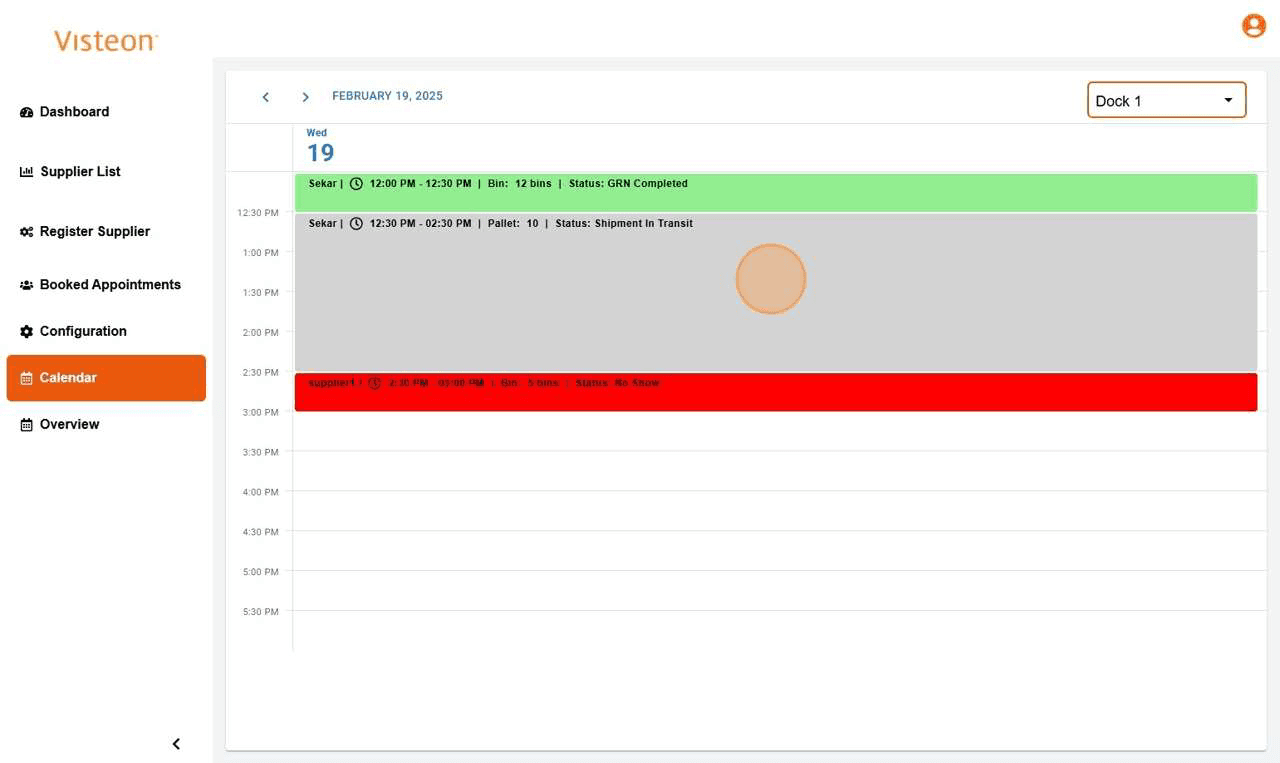
- Monitor slots in real-time, with statuses updated dynamically (e.g., Shipment In Transit, Gate Entry In Progress, GRN Completed, No Show).
- Change slot statuses for the current date only.
4. Comprehensive Reporting
Admins can:
- Download detailed slot reports for any date, showing information such as Supplier Name, Dock Name, Slot Start/End Times, Actual Start/End Times, and Status.
- Access an overview of monthly, weekly, and daily summaries, as well as dock-wise daily slot summaries.
5. Real-Time Dashboard
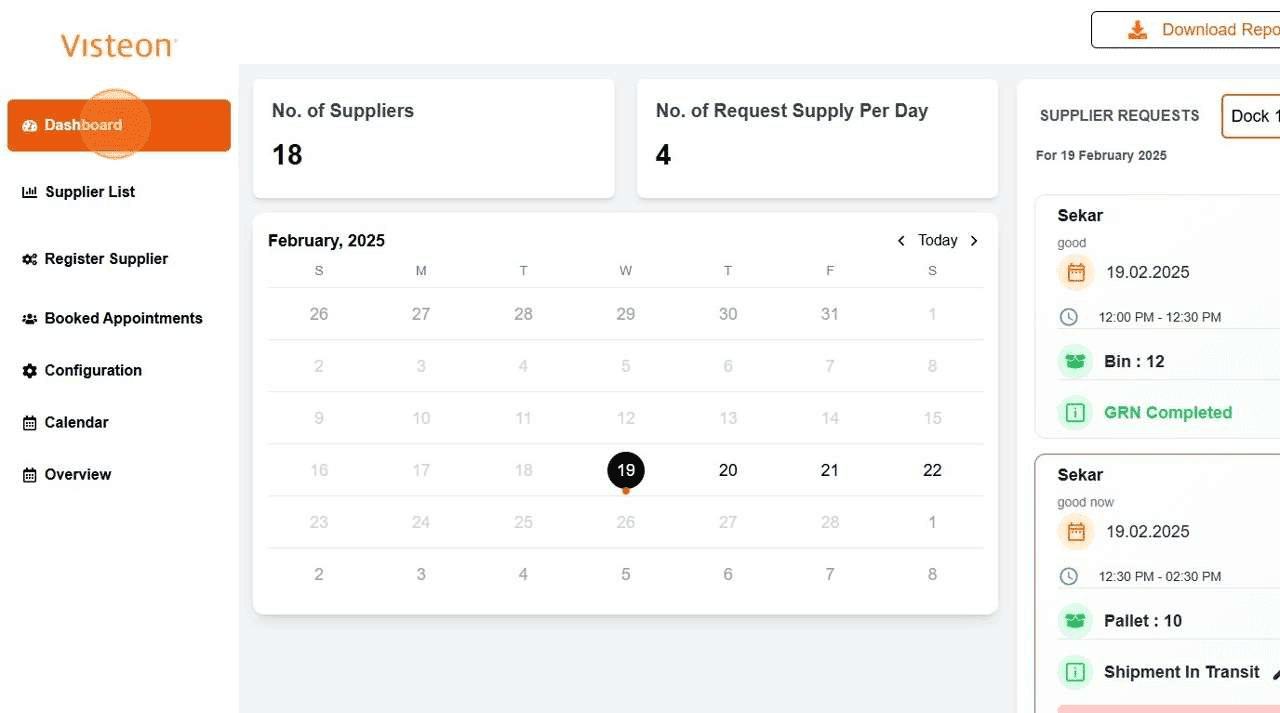
- Admins can view slot activity for three hours before and after the current time.
- The dashboard provides actionable insights into slot statuses and dock utilization.
6. Analytical Summaries
- Monthly, Weekly, and Daily Summaries: Includes Total Bookings, Hit and Miss Ratios, Dock Utilization, GRN Completed Trends, Average TAT Time, Start/End Time Delays, and Average Delay Time.
- Dock-Wise Daily Summary: Includes Total Bookings, slots by status (Started, In-Progress, Completed, Delayed), and detailed slot information for the date.
RESULTS
Enhanced Efficiency: Streamlined slot booking and real-time tracking reduced scheduling conflicts.
Optimized Dock Utilization: Improved planning led to increased dock usage efficiency.
Data-Driven Decision-Making: Detailed reports and analytics provided actionable insights for operational improvement.
Increased Transparency: Real-time status updates improved coordination between admins and suppliers.
GROWTH AFTER RESULT
Operational Efficiency: Achieved a 60% improvement in dock utilization and reduced delays in cargo unloading.
Improved Coordination: Enhanced communication between suppliers and admins, resulting in smoother operations.
Actionable Insights: Comprehensive reporting enabled Visteon to optimize its logistical strategies further.
Case Study
Fleet Access Monitoring for Visteon
CLIENT OVERVIEW
Visteon is a global automotive electronics supplier and a leading provider of innovative technology solutions. With a focus on efficiency and advanced operational systems, Visteon sought to optimize its logistics operations to streamline slot booking and cargo unloading processes.
CHALLENGES
1. Inefficient Slot Management: Manual slot booking processes led to scheduling conflicts and inefficiencies.
2. Limited Dock Utilization: Lack of real-time tracking and analytics caused underutilization of docks.
3. Poor Visibility: Absence of centralized monitoring hindered effective oversight of slot statuses.
4. Reporting Gaps: Difficulty in generating detailed slot and utilization reports.
SWOT ANALYSIS
Strengths
- Established industry presence.
- Commitment to technological innovation.
Weaknesses
- Manual processes causing delays.
- Limited real-time visibility into slot statuses.
Opportunities
- Enhance efficiency through automated slot booking.
- Optimize dock utilization with real-time monitoring.
Threats
- Increasing logistical demands.
- Potential delays impacting customer satisfaction.
PROBLEM STATEMENT
Visteon required a robust web application to automate slot booking, improve dock utilization, and enable real-time monitoring for effective logistics management.
PROPOSED SOLUTION
1. Role-Based User Access
The application includes two user roles:
Admin: Full control over configurations, supplier data management, and slot monitoring.
Supplier: Ability to book slots for cargo unloading and manage bookings efficiently.
2. Automated Slot Booking System
Suppliers can:
- View available slots based on selected dates and docks.
- Specify unloading type (bins or pallets) and quantity.
- Book slots, with the system verifying if unloading fits within the slot duration.
- Utilize any remaining time as grace time.
3. Configurable Admin Features
Admins can:
- Add supplier data via Excel upload.
- Configure slot intervals, unloading times, calendar views, and dock availability.
- Monitor slots in real-time, with statuses updated dynamically (e.g., Shipment In Transit, Gate Entry In Progress, GRN Completed, No Show).
- Change slot statuses for the current date only.
4. Comprehensive Reporting
Admins can:
- Download detailed slot reports for any date, showing information such as Supplier Name, Dock Name, Slot Start/End Times, Actual Start/End Times, and Status.
- Access an overview of monthly, weekly, and daily summaries, as well as dock-wise daily slot summaries.
5. Real-Time Dashboard
- Admins can view slot activity for three hours before and after the current time.
- The dashboard provides actionable insights into slot statuses and dock utilization.
6. Analytical Summaries
- Monthly, Weekly, and Daily Summaries: Includes Total Bookings, Hit and Miss Ratios, Dock Utilization, GRN Completed Trends, Average TAT Time, Start/End Time Delays, and Average Delay Time.
- Dock-Wise Daily Summary: Includes Total Bookings, slots by status (Started, In-Progress, Completed, Delayed), and detailed slot information for the date.
RESULTS
Enhanced Efficiency: Streamlined slot booking and real-time tracking reduced scheduling conflicts.
Optimized Dock Utilization: Improved planning led to increased dock usage efficiency.
Data-Driven Decision-Making: Detailed reports and analytics provided actionable insights for operational improvement.
Increased Transparency: Real-time status updates improved coordination between admins and suppliers.
GROWTH AFTER RESULT
Operational Efficiency: Achieved a 60% improvement in dock utilization and reduced delays in cargo unloading.
Improved Coordination: Enhanced communication between suppliers and admins, resulting in smoother operations.
Actionable Insights: Comprehensive reporting enabled Visteon to optimize its logistical strategies further.

RELATED PROJECTS
RELATED PROJECTS

Advanced Payment Integrations
Advanced Payment Integrations
Advanced Payment Integrations

Intelligent Inventory & Order Management
Intelligent Inventory & Order Management
Intelligent Inventory & Order Management

Personalized Marketing & Analytics
Personalized Marketing & Analytics
Personalized Marketing & Analytics